IB French Ab Initio: The Beginner’s Advantage
What the exam is, why it may be the smartest subject choice a Hong Kong teenager can make — and the tricks that turn two years of French into a top mark.
A blank page — and why that is good news
Every IB student in Hong Kong faces the same fork in the road when choosing their Group 2 subject, Language Acquisition: continue a language they already study, or start something completely new. For hundreds of teenagers every year, the answer is French Ab Initio — and in our experience, it is one of the most underestimated choices on the whole diploma.
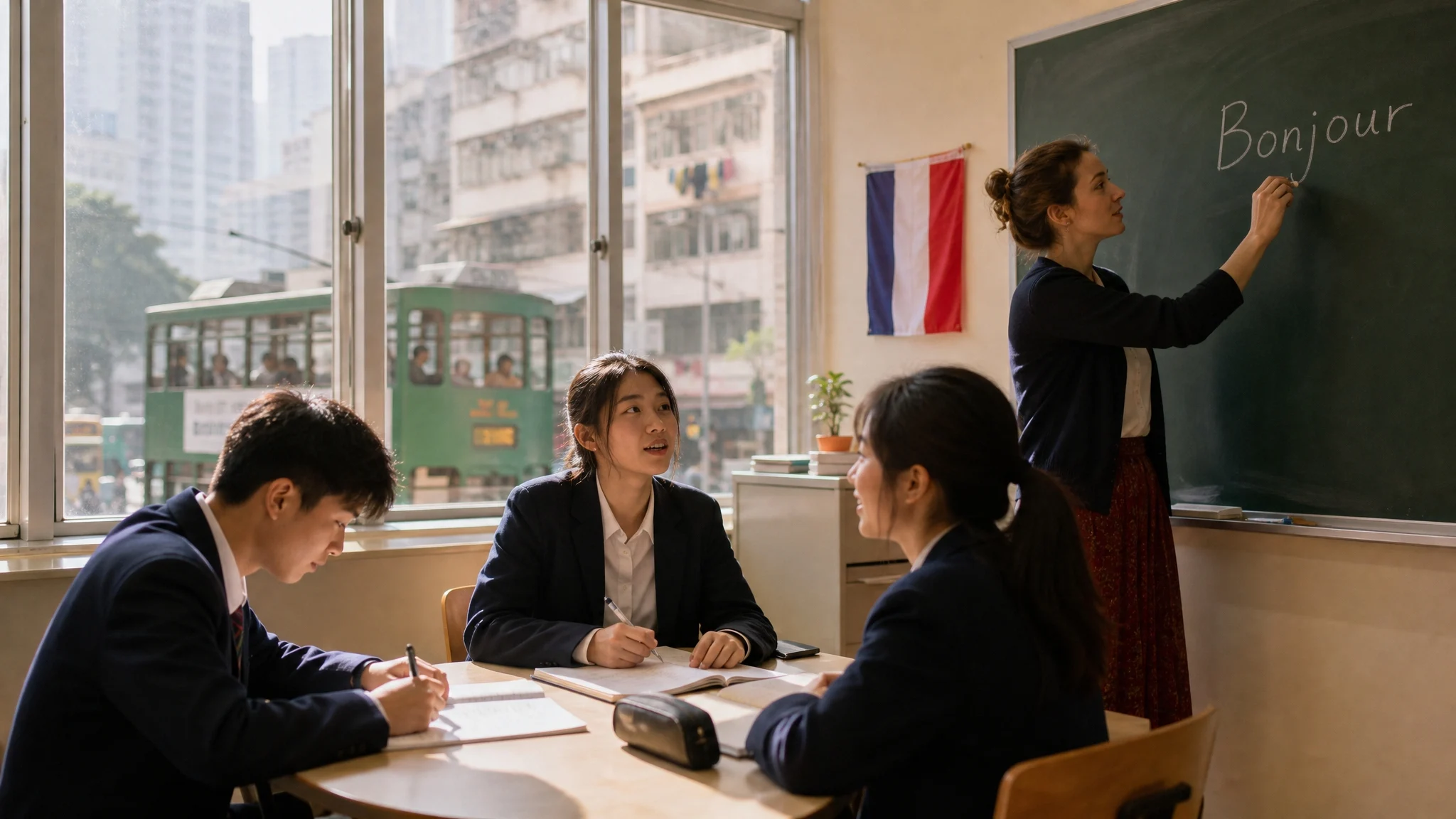
Ab initio is Latin for “from the beginning”, and the name is the promise: the course is designed for total beginners, students with little or no prior experience of the language. That is what makes it fundamentally different from Language A (literature, for near-native speakers) and Language B (for students with several years of the language behind them). In Ab Initio, nobody walks in with a head start. No student who spent summers in Paris, no native speaker “taking it easy” — the whole class starts at zero, on 1 September, together.
Our recommendation: Ab Initio is the exam we advise for teenagers who would like to discover a new language during their secondary education with a clear goal in mind. A two-year runway, a real diploma at the end of it, and a skill that stays for life — that is motivation built into the syllabus itself.
Ab Initio, Language B or Language A?
| Course | Who it is for | Level reached | Levels offered |
|---|---|---|---|
| Language A | Near-native speakers — literature and deep analysis | Native / near-native | HL & SL |
| Language B | Students with prior experience of the language (typically several years) | Upper-intermediate to advanced | HL & SL |
| Ab Initio | Total beginners — little or no experience of the language | Practical, usable French | SL only |
Ab Initio is offered at Standard Level only, and counts exactly like any other Language Acquisition subject for the IB Diploma.
What the course actually covers
Over the two years, the syllabus is organised around five prescribed themes, defined by the International Baccalaureate:
- Identities — who you are: family, appearance, health, daily routines.
- Experiences — daily life, travel, holidays, celebrations.
- Human ingenuity — technology, entertainment, the things we create.
- Social organisation — school, work, relationships, the community.
- Sharing the planet — the environment, rights and responsibilities.
Each theme is explored through the four language skills — listening, reading, writing and speaking — always on concrete, teenage-relevant topics. There is no abstract literature to dissect and no philosophy to master: the exam certifies that you can genuinely use French in real situations, which is precisely what a beginner needs and what universities understand.
How the exam works
At the end of the two years, the assessment has three components:
- Paper 1 — Productive skills (writing), ~25%. Two short written tasks — typically 75 to 150 words each — answering everyday prompts (a message, a blog post, an invitation…).
- Paper 2 — Receptive skills (listening and reading), ~50%. Comprehension of short recordings and texts on the five themes: multiple choice, matching and short answers.
- Individual oral, ~25%. A friendly 10-minute conversation with your teacher — prepared with 15 minutes of documents — describing and comparing visuals, then generalising about the themes.
Why it is such a useful exam — the benefits for the student
1. A diploma with a goal in mind
Teenagers thrive when the finish line is visible. Ab Initio gives a beginner a two-year journey with a recognised international diploma at the end — not vague “learning for learning’s sake”. The goal pulls the effort.
2. A fair playing field
Because the course is for total beginners, as opposed to Language A or B, assessment is calibrated to what two years of beginners can achieve. Students are not punished for starting late — starting late is the course.
3. A third (or fourth) language on the diploma
Most Hong Kong students already juggle Cantonese, English and Mandarin. French adds a language used across five continents and an official language in around thirty countries and in many international fields and organisations — a genuine differentiator on university applications, where a fourth language signals ambition and discipline.
4. Open-mindedness and global awareness
Discovering a new language and culture develops open-mindedness, awareness and general culture — and a better understanding of our global world. The IB literally lists “open-minded” among its learner profile attributes; Ab Initio is where students live it, one conversation at a time.
Why French — specifically
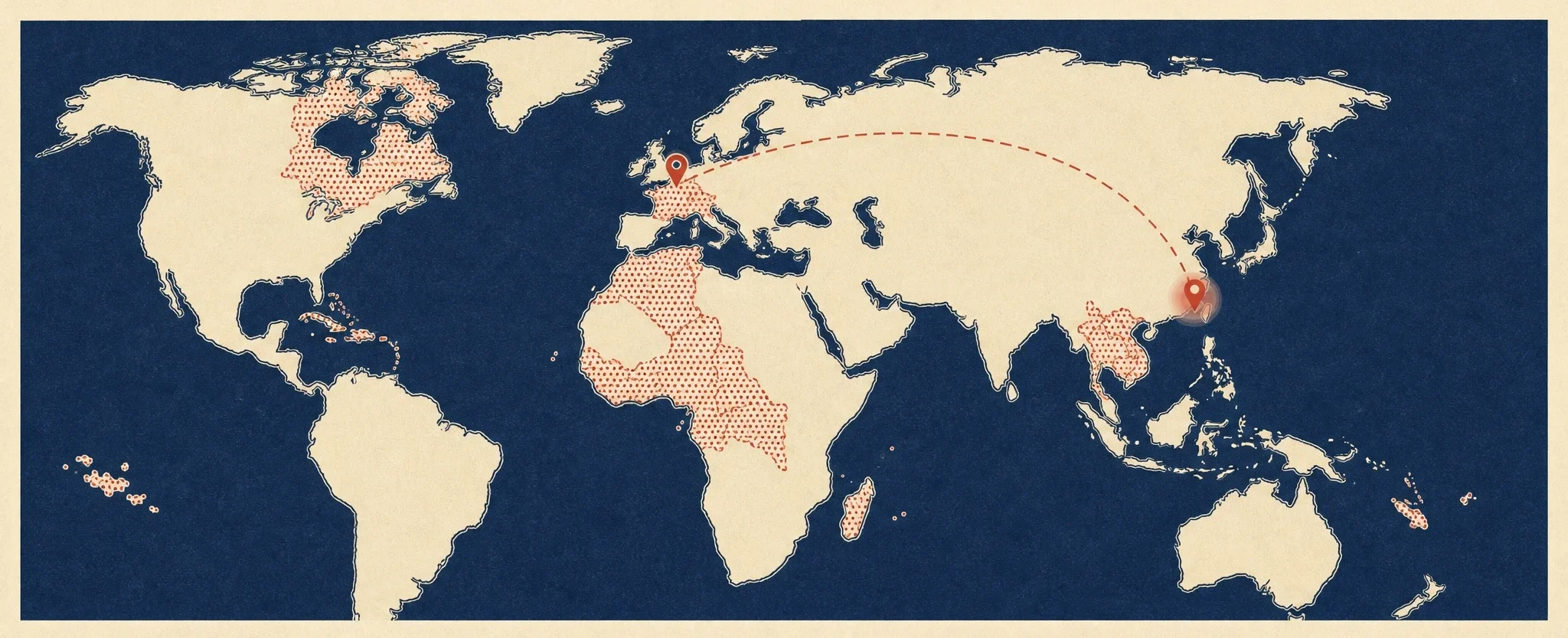
Any new language rewires a brain; French comes with outsized dividends. French is widely used across five continents and is an official language in around thirty countries, as well as in various fields and organisations — from the United Nations and the European Union to the Olympic Games and international law. It is the language of diplomacy and human rights: the words of the Universal Declaration of Human Rights were drafted in French, and to this day the language carries weight in embassies, NGOs and international conferences.

And French culture is quietly everywhere in a Hong Kong teenager’s life:
- Fashion — Paris still dictates what the world wears each season.
- Cuisine — the French gastronomic meal is on UNESCO’s heritage list.
- Luxury and philosophy — the maisons everyone follows, and the thinkers (Descartes, Sartre, de Beauvoir) everyone quotes.
- Business — French groups such as AXA and BNP Paribas are global giants… and even Hong Kong’s own tramway is operated by a French-owned company. The student riding the tram to school in Causeway Bay is riding a piece of France.
A smart choice for Hong Kong students
Hong Kong is one of the strongest IB territories in the world — its students regularly post some of the best diploma results globally, and competition inside the classroom reflects that. In that environment, Ab Initio offers something rare: a subject where the playing field starts level and where steady, structured work converts almost mechanically into points. For a student who already carries heavy HL subjects in sciences or mathematics, a well-coached Ab Initio course is the smart way to protect the overall score while adding a lifelong skill. Several international schools in Hong Kong offer French Ab Initio; where the school does not, a structured external course and past-paper training keep the candidate on exactly the same road.
Five tricks to succeed in IB French Ab Initio
- Master the basics cold. The exam recycles the same foundations — greetings, question words, the present, passé composé and future of core verbs, numbers, dates. Total automaticity on these frees your brain for the task in front of you.
- Work pronunciation from day one. French is remarkably regular once you know its sound rules — and a quarter of the grade is oral. Ten minutes of reading aloud a day builds the accent and the confidence the exam rewards.
- Practise little and often. The 10–15 minute daily habit we recommend to every learner beats weekend marathons: your brain needs contact with French every day, not heroics once a week.
- Use flashcards by theme. Vocabulary organized around the five prescribed themes is exactly what Papers 1 and 2 test — and you can try our free IB French flashcard resources, built around the syllabus.
- Train on the task formats. Two short writing tasks, timed; listening done twice, then reading; a mock oral with visuals — rehearsing the exam’s actual shapes removes the fear and half the mistakes. This is the core of our Ab Initio preparation.
Frequently asked questions
Can I take Ab Initio if I already studied some French?
The course is intended for students with little or no prior experience of the language. A year of casual school French is usually acceptable; several years of study point towards Language B instead — ask your school’s IB coordinator.
Is Ab Initio “easier” than French B?
It targets a lower level — it is built for beginners — and the cohort starts from zero. “Easier” really means calibrated: steady work maps onto marks with no native-speaker competition.
Does it count fully for the diploma and university?
Yes. Ab Initio is a full Group 2 (Language Acquisition) subject at Standard Level and earns the same diploma points as any other. Universities understand what it certifies: a working, usable French.
How difficult is the oral exam?
It is the part students fear most and then enjoy most. Ten minutes, prepared in advance, about visuals and familiar themes. With regular mock orals, it becomes the easiest 25% of the grade.
How many students get a 7?
Ab Initio grades are healthy worldwide because the course is beginner-calibrated — but a 7 is never automatic. It rewards the students who train all three components, especially listening, all year long.
We are not French-speaking at home. Is that a problem?
Not at all — most Ab Initio candidates worldwide come from non-French-speaking families. What matters is the method: basics mastered, pronunciation trained early, daily practice and exam-format rehearsals.
Starting from zero is our specialty
At Interactive French, we coach Hong Kong students through IB French Ab Initio — and through DELF, IGCSE and IB French B — with native teachers, syllabus-mapped flashcards and mock orals that make the real one feel familiar.
Browse our free IB French resources → interactivefrench.hk/resources/ib
Tags

Anthony Regent
✍️ Anthony: Expert French Educator & Blog Author Anthony is a highly experienced French educator and prolific article writer, dedicated to making French accessible and engaging for everyone. With over 10 years of experience in the field, he brings deep educational insight to his content. His extensive background includes working as a course coordinator and innovator in curriculum design, where he expertly developed French syllabi and created effective lesson materials. This expertise informs every blog post he writes. As a valued blog author, Anthony specializes in writing insightful, authoritative articles about: - French Learning Tips and effective study strategies. - In-depth breakdowns of French Exams (DELF, DALF, TCF preparation). - Fascinating insights into French Culture and Francophone life. Follow Anthony's blog for expert guidance, practical tips, and a deeper understanding of the French language and culture. Learn, master, and read with a decade of expertise!
Related Posts

What is HKDSE about in 2026?
Key information Two for One: You get two official certificates—the DELF certificate and the HKDSE result—from one…
Read More
15 Effective Ways to Practice French Outside the Classroom
Why Practice Matters Effective Methods Balanced Routine Making French Daily Learning French requires consistent practice,…
Read More
Why Learn French in Hong Kong: Career, Immigration & Exam Benefits
💼 Career Advantages 🎓 Academic Pathways 💯 Official French Exams 🌍 Cultural Benefits 🇭🇰 Your…
Read More